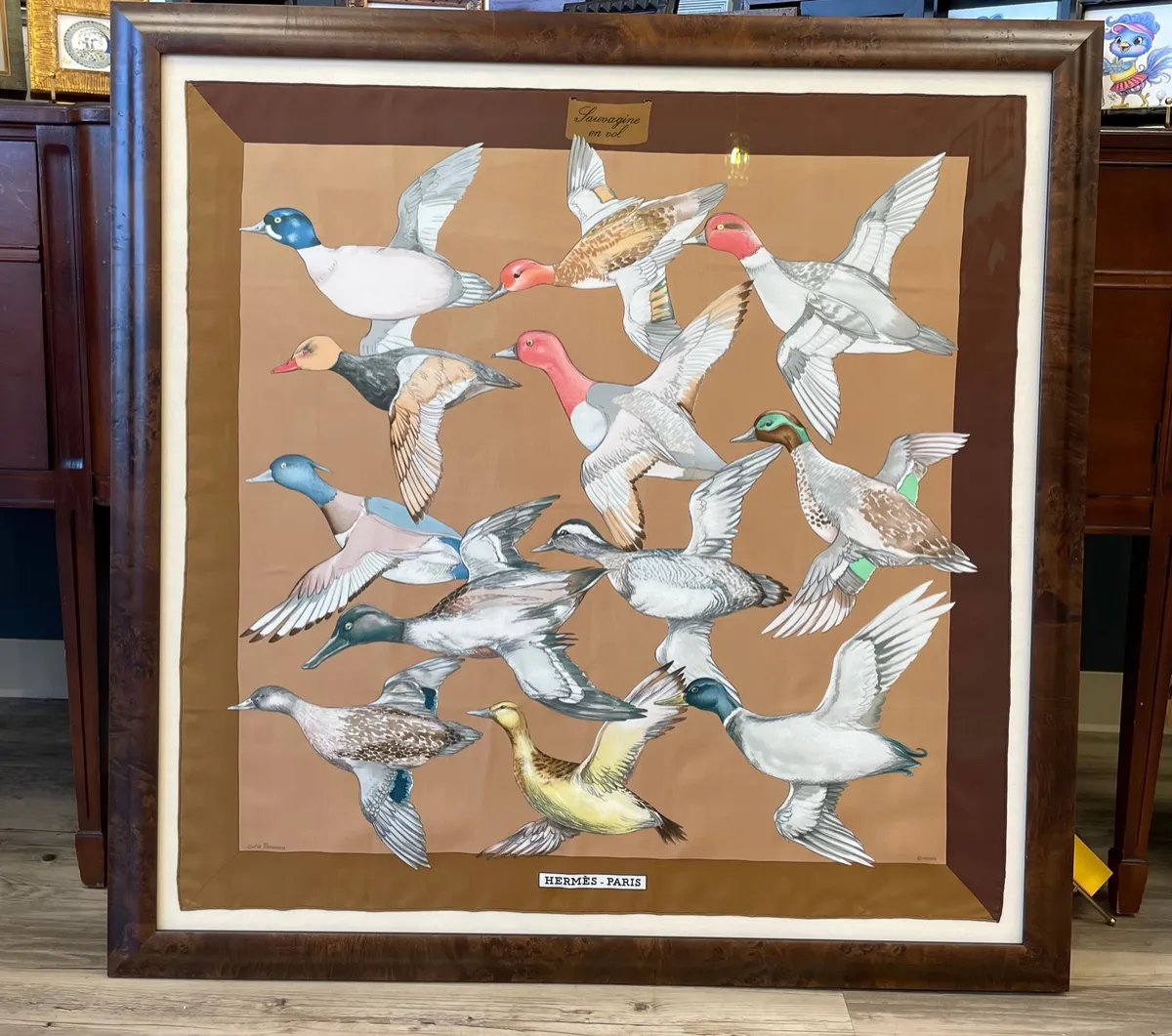
How to Frame a Vintage Silk Garment So the Fabric Doesn't Sag
To frame a vintage silk garment so the fabric doesn't sag, it must be fully supported across its entire surface on a padded, acid-free mount — stitched gently into place with conservation thread rather than glued or pinned — so the garment's own weight is distributed evenly instead of pulling down on a few stress points. At Tricia's Rose City Framing here in Tyler, Texas, that even support is the whole game, whether it's a vintage silk garment, a scarf or a delicate wall hanging; silk and antique textiles stretch and drape over time, and without a proper mount behind them, gravity always wins. The good news is that your silk garment absolutely can be framed beautifully and safely — even if someone has told you it can't.
1. Why Vintage Silk Garments Sag (and How to Stop It)
A silk garment sags for one simple reason: the fabric is heavier than it looks, and silk has very little memory. Left to hang from a couple of points, it slowly droops, puckers, and stretches at the shoulders and sleeves where the weight concentrates. Antique textiles are especially vulnerable because the fibers have already softened with age, so they give way faster than anyone expects.
The fix isn't a stronger hook or a tighter stretch — it's full, gentle support behind the entire garment. When the whole silk garment rests against a padded, breathable mount, no single thread carries more than its share, and the fabric stays exactly where you want it for years.
- Silk fibers stretch under their own weight when hung from few points
- Sleeves and shoulders are the first areas to pull and distort
- Full-surface support, not tension, keeps the garment stable long-term
Pro Tip: Never try to "pull it tight" to remove wrinkles — tension is what causes the sagging and warping in the first place. Support, don't stretch.
2. The Right Mount Makes or Breaks a Silk Garment
The foundation of any textile framing job is the mounting board behind it, and for a vintage silk garment that board needs to be acid-free and padded. Acid-free materials matter because ordinary mat board and backing can off-gas and discolor delicate silk over decades. A thin layer of conservation batting, wrapped in washed cotton or muslin, gives the garment something soft to rest against and something safe to be stitched into.
That fabric-covered surface is what lets us anchor the silk garment invisibly. Instead of adhesives — which will stain silk and are nearly impossible to reverse — we use fine stitches through the backing fabric to tack the garment in place at strategic points. For guidance on why reversible, acid-free methods matter for keepsakes like this, the Smithsonian's collection care resources at si.edu are a solid starting point.
- Acid-free backing prevents long-term discoloration
- Padded, cloth-covered mounts allow invisible hand-stitching
- Reversible methods protect the silk garment's value and integrity
Pro Tip: If a silk garment has ever been glued or taped into a frame, bring it in before you try to remove anything — the wrong solvent can do more damage than the adhesive.
3. Hand-Stitching: The Secret to a Silk Garment That Stays Put
Hand-stitching is how a silk garment gets held firmly without a single visible fastener. Using conservation-grade thread that matches the fabric, we place small, loose stitches through the garment and into the padded mount behind it — just enough to carry the weight, never so tight that it pulls or dimples the silk. The stitches are distributed across the shoulders, the sleeves, and the body so the load is shared evenly.
This is painstaking, slow work, and it's exactly why pins, staples, and glue have no place near a textile like this. Pins rust and leave holes. Adhesives stain and set. Stitching is the only method that is both secure and fully reversible, so your silk garment can be safely removed someday with no trace left behind.
- Conservation thread matched to the fabric disappears into the design
- Stitches spread the weight across many points, not a few
- Fully reversible — no permanent holes, residue, or damage
Pro Tip: Ask whether your framer hand-stitches textiles or relies on adhesive. For anything vintage, hand-stitching is the answer you want to hear.
4. Give the Fabric Room to Breathe Inside the Frame
A vintage silk garment should never press flat against glass, because trapped moisture and direct contact can mat the fibers and encourage mold. The garment needs a little breathing room between the surface of the fabric and the glazing above it. We create that space with a deep shadow box or spacers that lift the glass off the textile entirely.
That same depth is what lets a silk garment's folds, sleeves, and texture show the way they're meant to. These are three-dimensional garments, and flattening them under glass robs them of exactly what makes them beautiful. A proper shadow box honors the drape while keeping dust, light, and hands away from the silk.
- Spacers or a shadow box keep glass off the fabric surface
- Breathing room prevents moisture damage and matting
- Depth preserves the silk garment's natural folds and dimension
Pro Tip: Choose UV-filtering glazing for any silk you'll hang on a wall — light fading is slow, permanent, and heartbreaking on antique textiles.
5. Framing an Oversized Silk Garment Without Compromise
Silk garments are large, and a full-length one can easily exceed the size of standard frames — but oversized doesn't mean impossible. We've framed textiles far larger than a silk garment, including a 79-by-76-inch heirloom quilt, so an outstretched garment is well within reach. The key is building a frame and mount designed for that specific size, with internal support rated for the weight.
Big textile projects also mean more decisions: how to present the sleeves, whether to display the garment fully opened or artfully folded, which mount color complements the silk. This is where we love bringing the client in as a true collaborator, so the finished display reflects your home and your story — not a one-size-fits-all template.
- Oversized frames and mounts are custom-built to the garment's dimensions
- Internal support is engineered for the textile's real weight
- Presentation style (open vs. folded) is a design choice we make together
Pro Tip: Measure your silk garment fully opened before assuming it won't fit a frame — most "it can't be done" garments absolutely can, with the right plan.
What we've learned about framing vintage silk garments after years in the field
In this business, the hard jobs are our favorite jobs. We've framed pieces from one inch square all the way up to eleven feet by eleven feet — animal skin, century-old documents, vellum blueprints, textiles and needle art of every kind — and the common thread is that someone was once told "we can't do that." Most of the time, we can. What we don't know, we'll research, and the tough ones we solve through what we call framing by committee: a team approach where we'll pull in more experienced mentors to work through the tricky mechanics of a garment like a silk garment.
A vintage silk garment deserves that kind of attention. Silk has a mind of its own, and every garment ages differently, so there's no copy-and-paste solution. We treat every item that comes through our door as if it were our own family treasure — because behind the fabric there's almost always a story. Someone's grandmother, a trip across the world, a wedding, a heirloom passed down. We want to hear that story, and we want the framing to protect it for the next generation.
What makes our approach different is that we don't rush it and we don't cut corners on the conservation side. The stitching, the acid-free mounts, the breathing room, the UV glazing — none of it is optional when the goal is zero sag and zero damage decades from now. You can see more of the unusual work we take on over at Rose City Framing.
And honestly? These are the projects that still make us excited to walk in the door every single day. Indeed.
How Tricia's Rose City Framing helps you frame the "impossible"
If you've got a vintage silk garment — or a jersey, a quilt, a blueprint, a three-dimensional collectible — and you've been told it's too big, too delicate, or too odd to frame, that's exactly the work we're here for. We're a full-service custom frame shop specializing in shadow boxes, textiles, oversized items, and the pieces most people assume can't be done. From the first conversation, you'll have a say in everything: the mount color, the frame style, how the garment is presented, so the finished display fits your home and your story.
Come tell us about your silk garment. Bring it in, show us the folds and the fabric, and let's figure out together how to mount it so it never sags and stays safe for the long haul. You can reach out and see more of what we do at Tricia's Rose City Framing, based right here in Tyler, Texas.
Your treasure can be framed beautifully — let's prove the "can't be done" crowd wrong together.
FAQ
How do you frame a vintage silk garment so the fabric doesn't sag?
To frame a vintage silk garment so the fabric doesn't sag, it must be hand-stitched onto a padded, acid-free mount that supports the garment across its entire surface, distributing the weight evenly instead of letting it pull from a few points. At Tricia's Rose City Framing in Tyler, Texas, we use conservation thread and reversible methods so the silk stays stable for years without glue, pins, or tension.
Can a vintage silk silk garment be framed without damaging it?
Yes, a vintage silk silk garment can be framed without damage when conservation methods are used, meaning acid-free materials, hand-stitching instead of adhesives, and glazing that doesn't touch the fabric. These reversible techniques protect the garment's value so it can be safely removed or re-framed later if needed.
Should a silk garment be framed flat or in a shadow box?
A vintage silk garment should be framed in a shadow box rather than flat, because the depth lifts the glass off the fabric, preserves the garment's natural folds and dimension, and gives the silk room to breathe. Pressing a silk garment flat under glass can mat the fibers and trap moisture against the textile.
Can you frame an oversized silk garment that won't fit a standard frame?
Yes, an oversized silk garment that won't fit a standard frame can be custom framed with a mount and frame built to its exact dimensions. At Tricia's Rose City Framing in Tyler, Texas, we've framed textiles far larger than a silk garment, including a 79-by-76-inch heirloom quilt, so oversized garments are well within reach.
What kind of glass should be used to frame a vintage silk garment?
UV-filtering glazing should be used to frame a vintage silk garment, because silk and antique textiles fade permanently under light exposure over time. Pairing that glazing with spacers or a shadow box keeps the glass from touching the fabric, protecting the garment from both light and moisture damage.